 This past Sunday was "Theological Education Sunday" at University Presbyterian Church. I put together the order for worship and preached on Mark 9:30-37. For a copy of my sermon, click here. (Names have been changed to protect the innocent.)
Friday, September 29, 2006
Last Sunday's Sermon
This past Sunday was "Theological Education Sunday" at University Presbyterian Church. I put together the order for worship and preached on Mark 9:30-37. For a copy of my sermon, click here. (Names have been changed to protect the innocent.)


A trip to the game
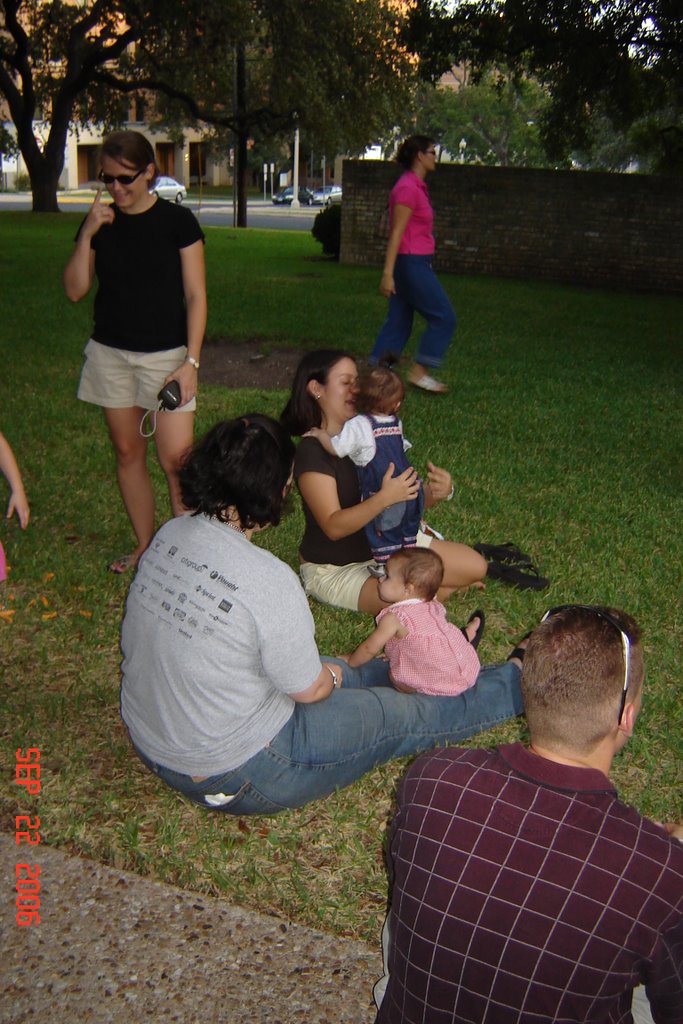
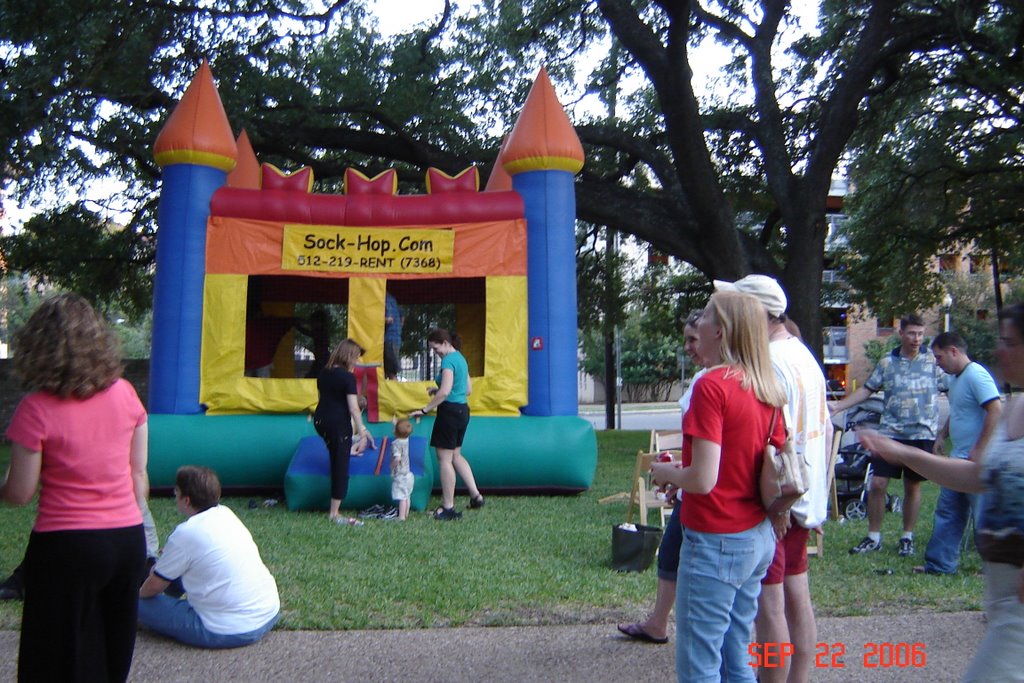
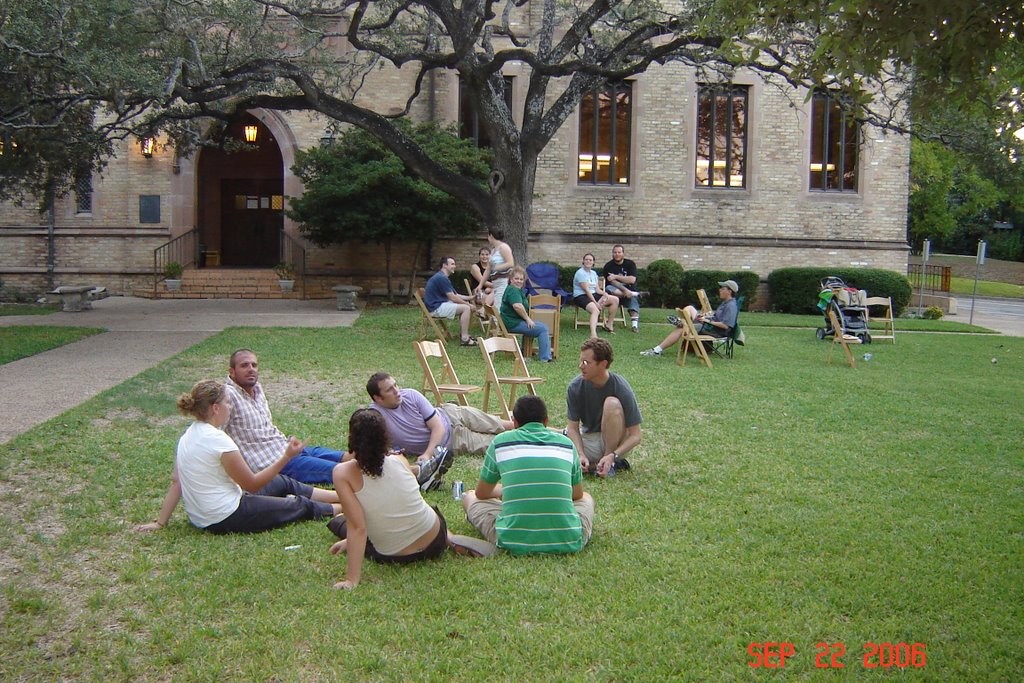
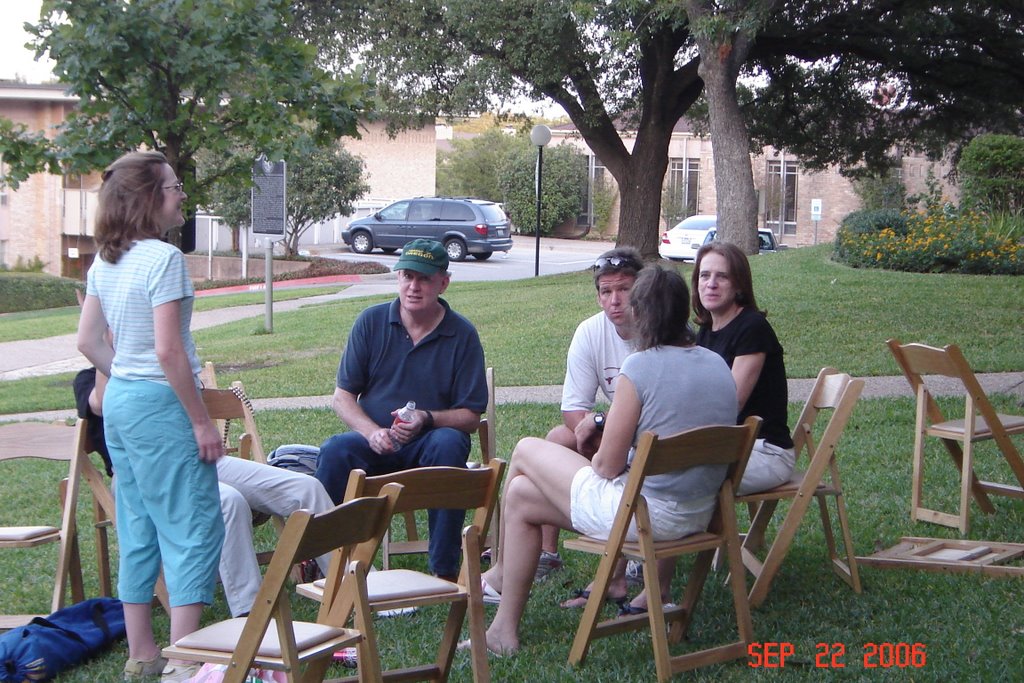
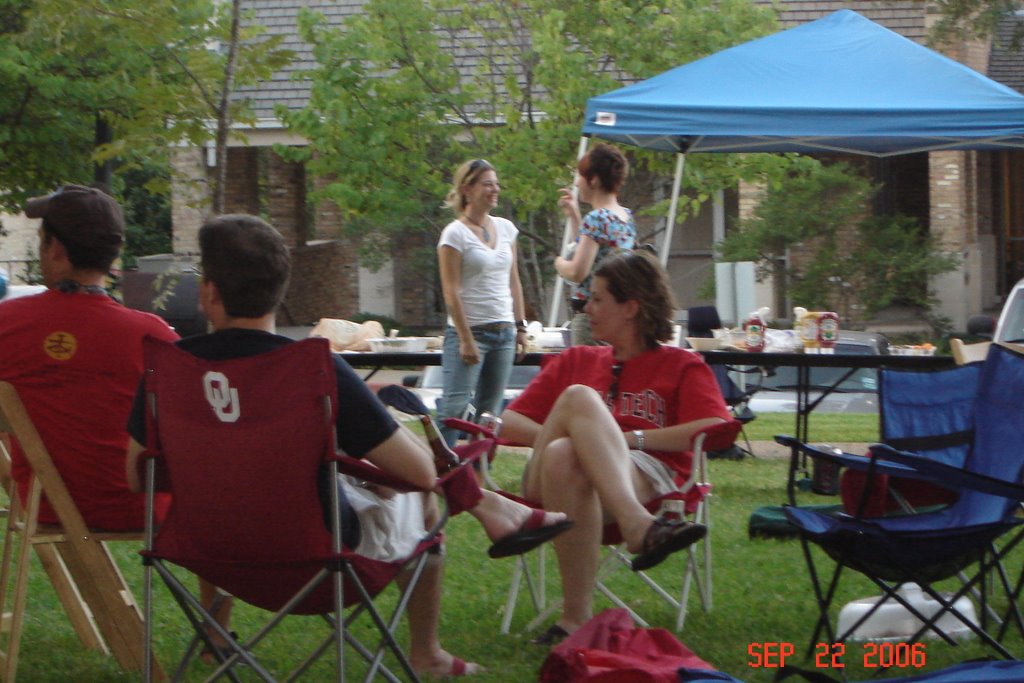
I won tickets to the game by cooking a batch of Chilli. It was my first time to visit the Ex Student's Association
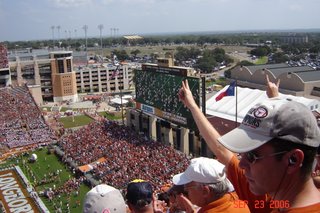
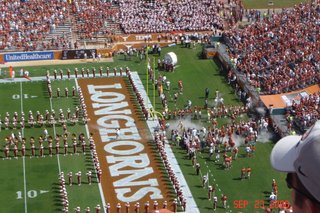
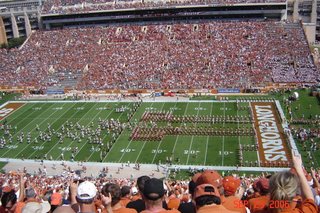
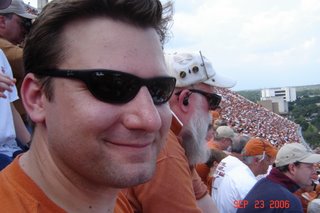
We left at the end of the 3rd quarter ...lightning.
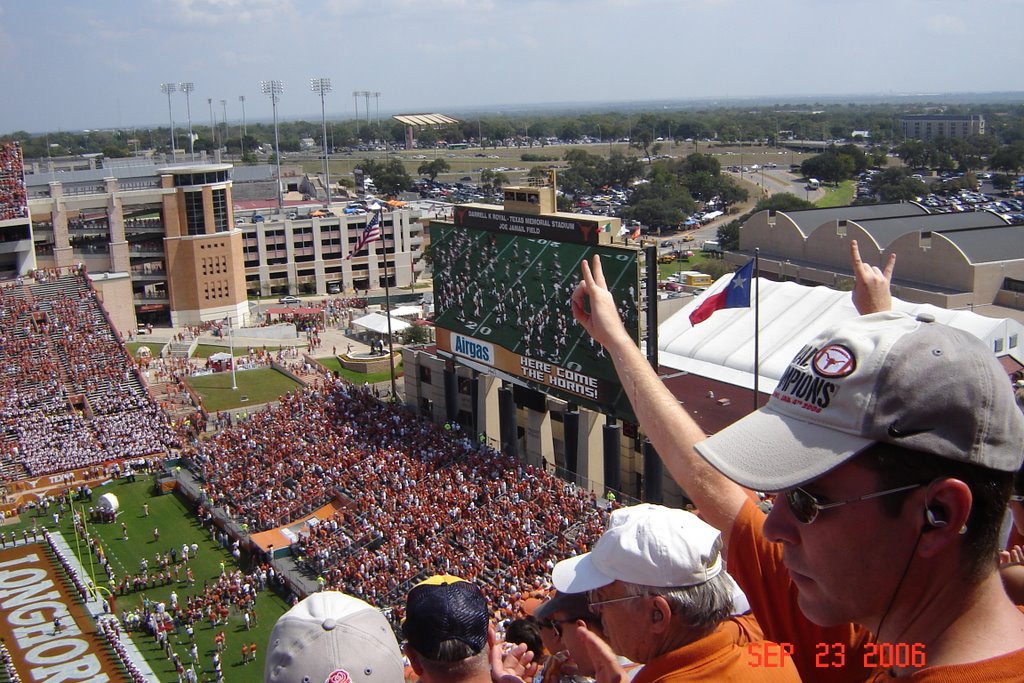
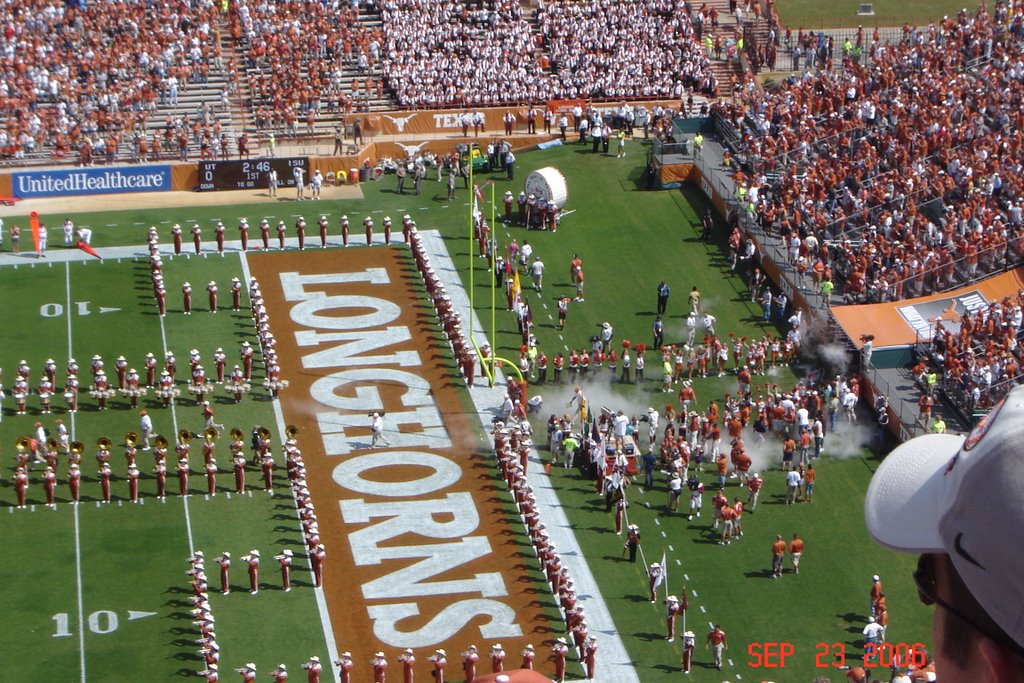
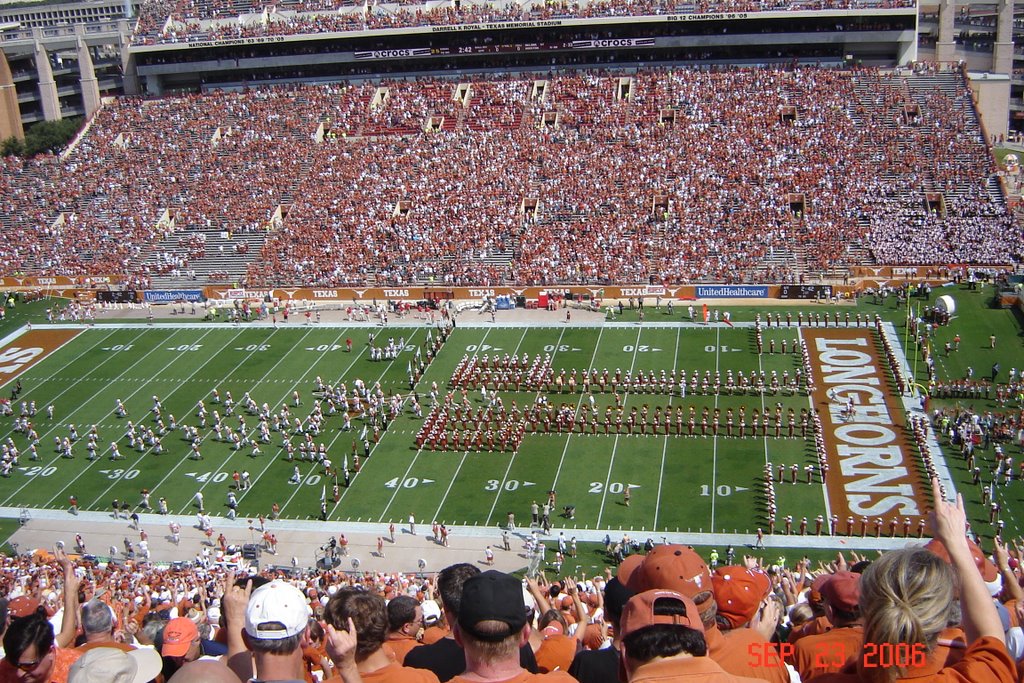
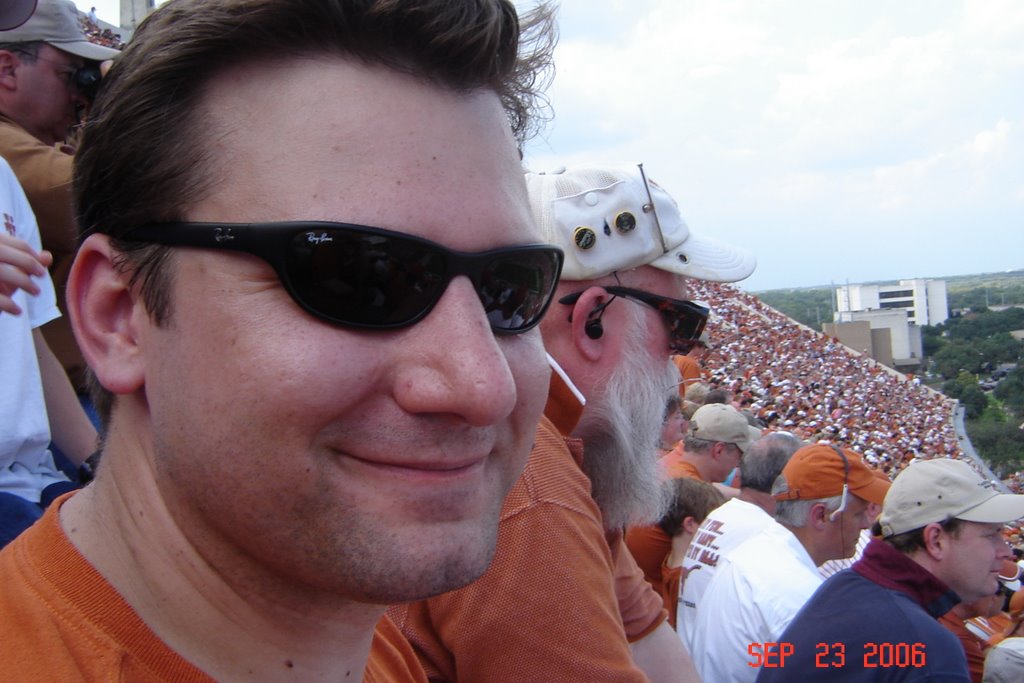
We left at the end of the 3rd quarter ...lightning.
Friday, September 08, 2006
Which theologian are you?
Thanks for the quiz Brother Pappan.
Which theologian are you? created with QuizFarm.com |
Wednesday, September 06, 2006
What if?
 {The beginning of the semester...and I am already running behind. Is that just the natural state of things? Too much has gone on in the past couple of weeks to post--so I won't. Instead, I look ahead. Look to the creative process, alive in the world, radiating from inside/outside/from beyond...Have to change the world (with God's help, I will)...so tomorrow, pick up 1 piece of trash=1 less spam attack. It is a matter of using time wisely, being trained visibly and covertly.}
New time: God recreated my world in the breaking of bread...in the tasting of wine. What I remember before that moment is fuzzy history...circle circle dot dot
Thursday, August 31, 2006
My bible exegesis in a nutshell

Luke 4:1-13 illustrates three patterns of temptation which constantly threaten to corrupt the Christian life: self-dependence (a failure to trust in God’s provision), misplaced loyalty (the idolatry of putting sacred trust in false gods), and short-sighted faith (remaining true to the letter of God’s word while failing to embrace the spirit in which it is revealed, written, and proclaimed). In this pericope, Jesus thwarts the devil’s endeavors to corrupt his faith, obedience, and authority by recalling scripture rooted in Israel’s wilderness journey. Consequently, he reveals what healthy faith is capable of and how we may appropriately respond to God’s grace.
I am taking a vacation for a few days...via con dios.
Sunday, August 20, 2006
Hofstadter's trees
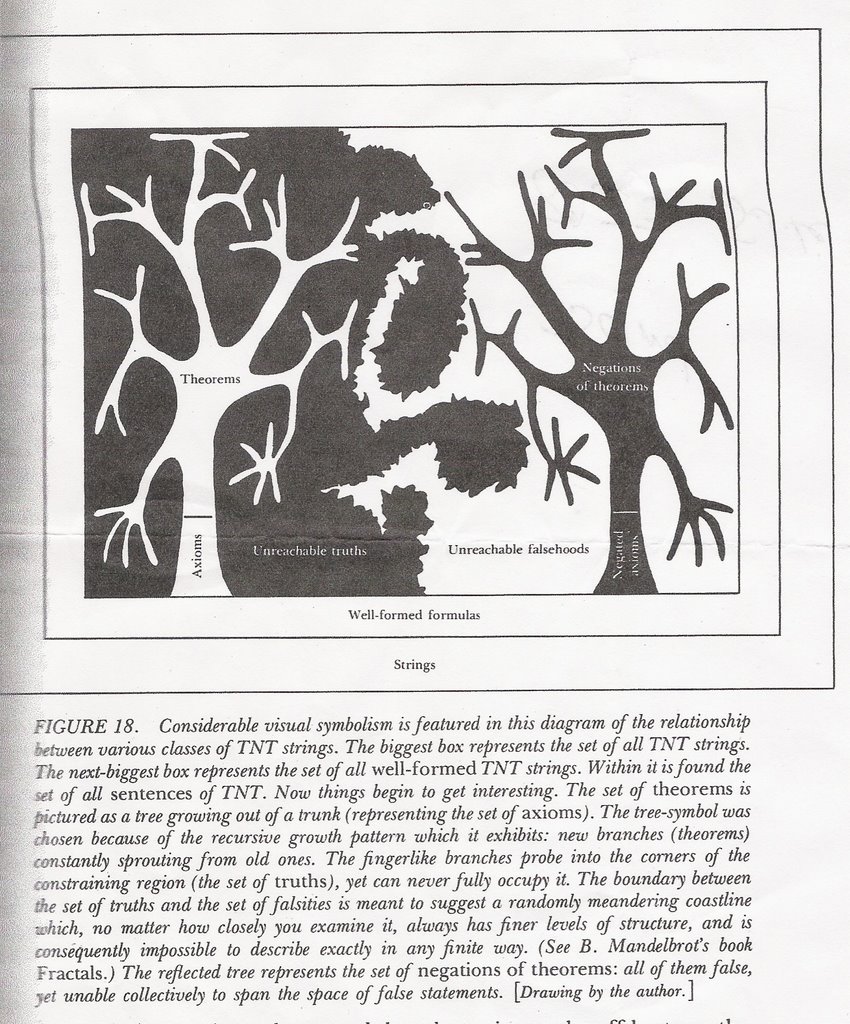
What do we know? How do we know it? Today we went to a semi-private catholic baptism. The whole time I was thinking about how we communicate. In "live" human communication, body language and tone carry much of the message. The words we speak play a small part of the message. Much of the time, I process "what someone says" through "who the person is". Things said, that seem out of sorts, are colored by the body language and tone of the speaker. What does this mean for the printed page? scripture? poetry? theology? It means something.

Thursday, August 17, 2006
Are you on myspace?

I don't really use "myspace" much, but I am finding that it is a good way to reconnect with friends from the past. As more people sign up, the ability to network becomes easier. I have been delighted, amused, amazed, dumbfounded, and surprised to find out what has been happening with friends of the past. If you haven't looked into it...maybe you should.
Wednesday, August 16, 2006
Take me out to the ballpark
 This weekend we went to Houston for an Astros game.
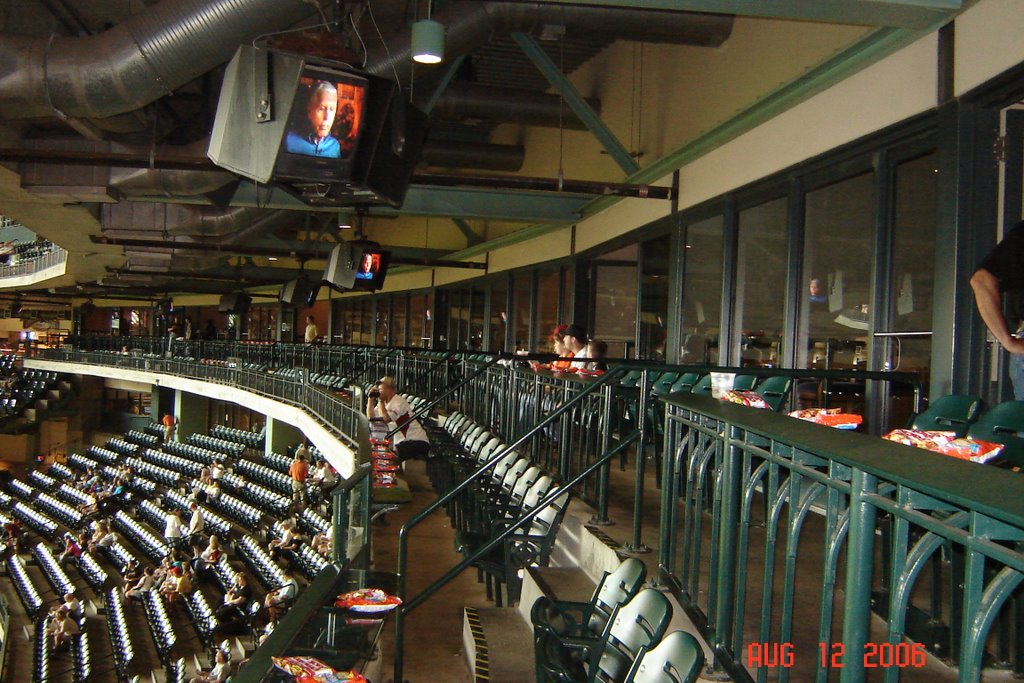 Box seats.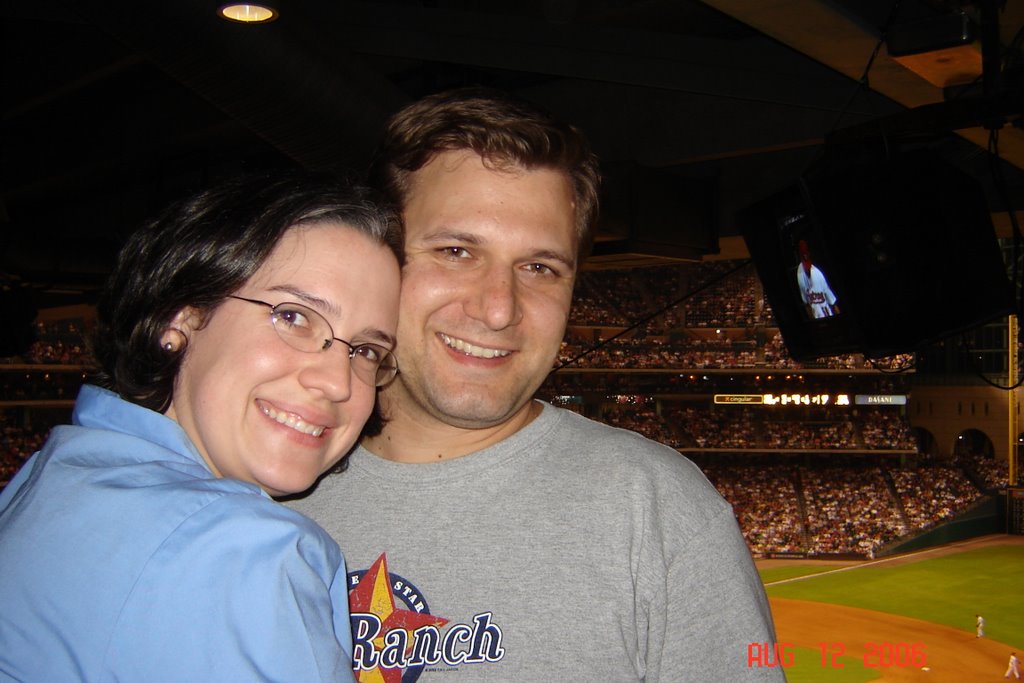
Oh, the life of a poor grad student.
3 Chaplains that are happy their internship is over.
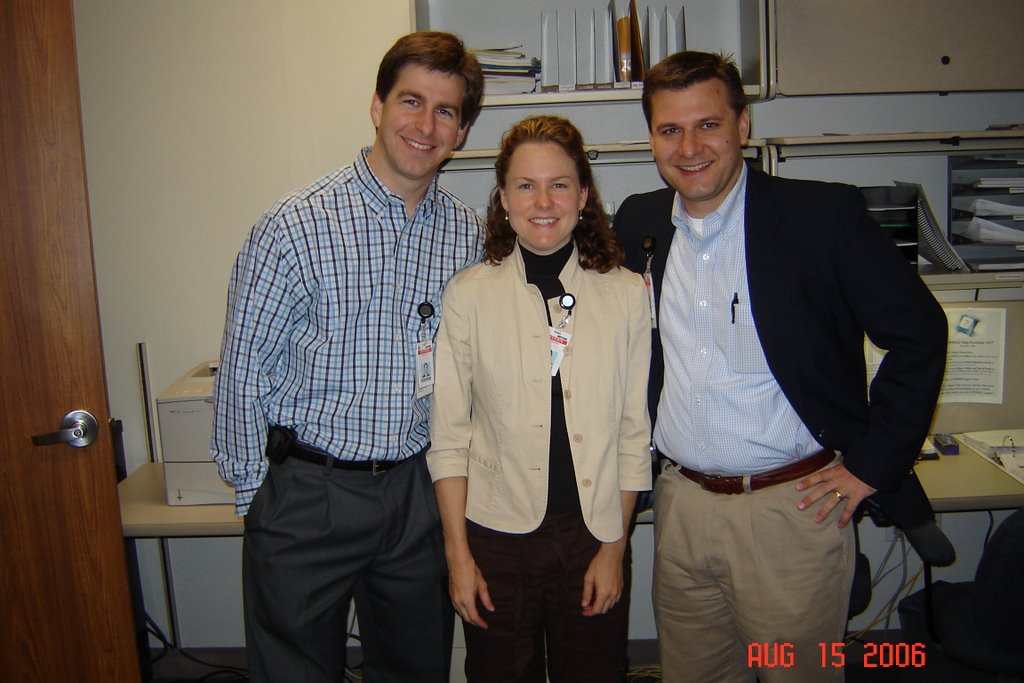 What does a final self evaluation look like:
1. List your learning goals. Give one example for each goal of how you purposefully attempted to address the goal. What new insights, if any, do you have about ministry and about yourself with respect to your goals?
a) To practice pastoral skills in a clinical setting
by interacting with patients and family:
I performed daily pastoral visits with patients on my assigned floor and followed patients (or their families), during times of crisis, healing, uncertainty, stress, and transfer to other facilities or discharge home. Sometimes I liked the routine, but sometimes it began to wear on me.
by providing spiritual guidance and support:
I practiced being a non-anxious presence: relying on prayer, relying on reformed theology in the light of ecumenical practice, by identifying my own emotional responses and those of the patient, and by helping individuals call on support systems that they already had in place or by referring them to other avenues for support (i.e. social workers, family, or church).
by practicing listening skills:
I tried to keep in mind those listening skills that strengthen trust and communication. I also tried to remain aware of the daily distractions to active listening—and name these for what they are, whenever possible. I found some people easier to listen to than others—and some conversations carried more of an impact on me, especially speaking with the parents of patients. Perhaps this has something to do with my history and knowing how hard those conversations can be.
by being familiar with available referral sites:
I tried to remain aware of individuals that had been identified as “hospice” or “palliative care” patients. I made special efforts to speak with these people and their families on a regular basis. The social worker kept me informed of situations on the floor that were unusual, and I asked questions about these situations, where appropriate. Something I wish I had done this summer is visiting some of the hospice locations many people from my floor transferred to.
b) To develop a process of self evaluation
by utilizing group feedback:
I have found group feedback to be helpful in identifying personal style, in identifying other working theologies, and essential to processing thoughts and feelings from stressful situations. In terms of self evaluation, I have found myself focusing more on my feelings in order to self access my ability to fully engage in pastoral ministry. The group helped me to identify relevant feelings or concerns in a more timely manner. By utilizing group feedback, I have felt more equipped to process and deal with my own feelings as well as the feelings of those I have observed in the hospital and in the CPE group. I have also become acutely aware of my need for “self care”. I know that I am not effective when I am worn down—and that it is during those times when my energy level is at its lowest that I am most susceptible to illness or stress.
by responding to direct supervision:
I have found the supervision process to be rewarding and informative. During supervision I have especially enjoyed learning of different techniques and practices regarding self care, for maintaining pastorally engaged with groups of people, and for inter-departmental relationships.
by becoming familiar with acceptable outcomes:
I have learned that every situation carries with it its own set of circumstances and possibilities. I have found that the chaplain’s role must be flexible in order to serve a diverse population—and at the same time, the chaplain must be firm in only participating in those activities that align with his or her theological convictions.
c) To make effective use of my religious heritage
by participating in daily prayer:
I have participated in daily intercessory prayer for my patients, the hospital staff, and my peers. Some days these prayers have been more intentional than others—asking for specific outcomes or assistance. Other days, I have found myself lifting up names or situations in prayer, and trying to be more open to God’s response. I have used the PC(USA) Book of Common Worship frequently during my personal prayer time, and as a guide during times of crisis.
by participating in corporate prayer and worship:
I have found that participating in corporate worship (Sunday morning, for example) is difficult to do when I have been up all night. One Sunday, after an especially long on-call, I did attend an evening service at another Presbyterian church—but I missed the community and support that a “home congregation” can provide. I believe that it will be good for me to return to my normal weekly routine. While I did attend mass at SMC a few times, but I did not feel well connected there. I was familiar with the liturgy and with many individuals in attendance, but I felt a bit like someone who had been invited to the table but who was unworthy of the banquet.
by becoming familiar with PC(
One of my most insightful observations this summer has been in researching and implementing the theology recorded in the Presbyterian Book of Common Worship, Book of Order, and Book of Confessions. I have realized that the tradition I am affiliated with has become very “white bread” in its outlook. I was disappointed to discover that the Presbyterian church has several disconnects between reality (as I have observed it in the CPE program) and the reformed theology that the church embraces so desperately. The intersection of various cultures, languages, family structures, and inter-family dynamics makes “real life” much more complex than what Presbyterian heritage, doctrine, and dogma account for. This will need to be addressed in my future ministry.
2. Reflecting on your own faith perspective and your theology for ministry, give a specific example in each of the following areas of ways in which your faith was affected (e.g., enhanced, challenged, enlarged):
A. yourself in general (from the events of the summer)
I knew that during this summer I would have to face several fears—and I was worried about how my faith would fair during those times. One of those fears was walking into the room at Brackenridge where my brother died. I walked into the same physical space late one night—but it was no longer the same room. It had changed (like most areas of Brackenridge have over the past 7 years) and I have changed. I knew that CPE would force me to live into my theology—and recognize those areas where it is stronger (private prayer) and those where it is weaker (public prayer, answering questions about “why”). I know that my faith and my theology for ministry are very strong—because I firmly believe that “it is not about me”. I know that we are called to serve one another—and to walk with one another, in hardship and in good fortune. I believe that I can point to CPE and say that it has taught me that I can, with God’s help, enter into the most difficult of situations and be present—praise God—and love neighbor. Throughout the summer, my faith remained very centered in God’s grace and sovereignty—the one caveat was the environment…but I firmly believe that God’s grace and sovereignty are present even in the very depths of hell. I have often reminded myself of the words spoken to me by my first seminary professor, “If there is anything in the world that can shake your theology—then you have the wrong theology. Go back to the drawing board.”
B. you in relation to colleagues (a peer or your peer group or supervisor)
I enjoyed being in this group. I have found the different perspectives enlightening and at times attractive. I have realized how important it is to have a small group for pastoral support and exchange of ideas. Although we usually had some type of reflection before our classes, I found myself wishing that we could be able to worship together—in some “normal” way, outside the boundaries of the hospital. I appreciated the varied gifts that my peers and supervisor brought to group meetings. My challenge with the group has been to look for those areas where our traditions are similar, to seek out the deeper truths that affect us all, and to contemplate the “one true
C. you as minister/provider of pastoral care (patients, family, staff, etc.)
I have found that I am adaptive to an individual’s theology or lack thereof. I can usually carry on conversation and ministry without neglecting my own convictions. I have found that I must be open to many Christian “vocabularies” in order to speak to “regular people” about their faith. There are some of these “vocabularies” that I am not as comfortable with (like the question, “Did my dad accept Jesus Christ as his Lord and Savior before he died?”)—but I am learning to be flexible in these situations. I am reminded that our theological vocabularies are often formed by the books we read and the traditions we embrace (or reject). I know that it is important to keep building these tools for ministry by engaging and interpreting (for myself) the theologies of others as well as those of my own tradition. My faith and theology become stronger as I am better able to articulate what I believe—and why I believe it. Being present for patients, family and staff has shown me that “you’ve got to work with what you’ve got”.
3. Reflecting on your own cultural background, give a specific example in each of the following areas of ways in which basic assumptions you hold were affected (e.g., enhanced, challenged, enlarged):
A. yourself in general (from the events of the summer)
Like I said earlier, I have felt very “white-bread” during some interactions this summer. I have felt that CPE has provided me the opportunity to minister to a more diverse population than I normally encounter at my home church. I have realized that I need to do more work on my Spanish language skills. I do well accepting people from other cultures, backgrounds, creeds, etc. I have noticed that I have a hard time connecting with individuals that have no faith tradition to draw on—and perhaps this is because I find this so foreign to my background. I have also been pleasantly surprised by my ability to minister to individuals who were from other religions, ethnic groups, or denominations—as long as there was some foundation to build on.
B. you in relation to colleagues (a peer or your peer group or supervisor)
Again, denominational differences have proven to be the major “cultural” hurdle within the group. It seems that we often have different ways to express basically the same thing. I have felt that we have been, at times, tied down by our traditions’ rhetoric and unable to form our theological convictions without depending heavily on the cultures that have nurtured us in the faith. (I recall an exchange about Christ’s relationship with/in/to the sacramental elements that I found humorous—since this debate continues to rage on after all these years. I am reminded that this argument depends on what one’s definition of “is” is.) I know that I have been bound by some of my denominations challenges and successes—in expressing what is important to me and what I take comfort in.
C. you as minister/provider of pastoral care (patients, family, staff, etc.)
There were several times this summer when I entered a room and felt an immediate connection with the patient, family or staff. However, many other times, I felt that I had to work very hard to create the connections that are so important in forming trust. I believe that this was a good experience for me—being a chaplain to a diverse population—because it made me focus on who I am on the inside instead of who I appear to be at first glance. I have a renewed interest in the cultural significance of body language, eye contact, tone of voice, names, and the power of touch.
4. Describe a concept that you learned from a seminar that you employed to provide pastoral care this summer and illustrate with a story.
I was very thankful for the seminar on the death and dying process. I had the opportunity to see the process play out first hand in the weeks following. This seminar prepared me for the situation and helped me to understand (in a bigger-picture sort of way) what was happening for the patient, the family and the hospital staff. I have written about this event in a verbatim—the crux being that the information about final stages of death helped me to identify the situation and to minister to the patient’s family appropriately.
5. What did you learn about yourself in terms of how you related to your peers? What did you learn about group behaviors from being a part of your peer group? (Give specific examples)
CPE has reminded me that I enjoy working with people side-by-side/shoulder-to shoulder, although I usually find myself in leadership positions. I have appreciated the team aspect of chaplaincy, especially during those times where I have been able to rely on others to continue pastoral care (such as families dealing with death over several days or the patient who “needs” constant pastoral attention). I felt the group was a good place to find support although it was also a place where the individual was constantly challenged to be vulnerable and find strength in that vulnerability. I appreciated the flexibility of the group—and its ability to be more or less rigid in remaining “on task” depending on the needs of the group or the well being of its members.
6. List one strength and one weakness you discovered or confirmed about yourself this summer and describe your plan for further growth with respect to each in the future.
Weakness: I need to work on self care practices—because I am very susceptible to the “try to do it all” mindset. I need boundaries to protect my ability to minister to others, and to avoid burnout. Time management plays into the weakness over and over again in my life and studies. I am a procrastinator and I like to be in charge of my own direction—both are potential hazards for me in a ministry setting. Also, I often over-commit my time and energies without thinking through the consequences. This has been an ongoing area for improvement in my life—and CPE has pointed it out to me again. I need to be intentional in what I say “yes” to, knowing that decisions about scheduling and energy level affect my family and other relationships.
Strength: I have learned that I can enter into any situation, any call, any dynamic—and remain grounded in who I am, and in what I believe. I have a strong faith—really more in who God is to us than what God can do for us. CPE has given me opportunities to practice my faith in difficult situations. It has given me confidence in who I am as a Christian—and it has shown me new perspectives on God’s grace in the midst of misfortune.
Friday, August 11, 2006
I have finished my last "On-Call"
Super quick post: Baby fussy (tooth)+ chaplain internship almost over = little sleep. Genograms, Ords, and the what the bleep...oh my! I hope to have a real update next week.
Thursday, July 27, 2006
A binary branching fractal
 Every step is both binary and triune at the same time. I imagine a God who also keeps track of all of our possibilities. The result would therefore be alternate realities... because a God imagined alternate journey would be as real...as long as it exists in the mind of God. (Sidebar: Does existance depend on an effort from God, and if so...could God "close God's eyes" and make us all dissapear and then "open" them to bring us back into existance at the same instant/circumstance that we dissapeared?)
The theory I am kicking around is that someone who dies, turns right...when the rest of us turn left...in their world, they may still be walking with us...growing closer to God...living into new realities and forgetting the old...which would mean there would be an infinate number of parallel universes......
"Thy kingdom come, thy will be done... on earth as it is in heaven."
Wednesday, July 26, 2006
I know how Angela Lansbury must feel...
 The past few days have been rough. I am tired of seeing dead people. Will all of y'all do me a favor and quit kicking the bucket! Really, I don't mind... I would enjoy it if more of you would miraculously recover...
...theology is a lot messier in the real world than it is in seminary...Calvin/reformed tradition is a discipline that may inform regular practice-- but is it viable for flesh and blood encounters? I tend to use "club" theology... I pick up the biggest chunk of grace I can find and beat the hell out of the situation with it. It isn't surgery-- it is primal bludgeoning. It gets the job done...although it may not really be all that pretty.
Friday, July 21, 2006
A Strange Loop
Studying for the PCUSA ords... contemplating the self-referential language of the Trinity. Introspective Theology and paradox... "this statement is false"... "I believe that the existance of the classical "path" can be pregnantly formulated as follows: The "path" comes into existance where we observe it."
Wednesday, July 19, 2006
Emergency Baptism
 ...there shouldn't be emergency baptisms...then again, there shouldn't be infants dying in their parents arms...sometimes you do the wrong thing for the right reasons...theology, in such circumstances, is like trying to fight a dragon with marshmallows...I remind you now of these words of comfort:
Hear the words of our Lord Jesus Christ: (Matt. 28:18-20)
All authority in heaven and on earth has been given to me.
Go therefore and make disciples of all nations,
baptizing them in the name of the Father,
and of the Son, and of the Holy Spirit,
and teaching them to obey everything that I have commanded you.
And remember, I am with you always, to the end of the age.
Hear also these words from Holy Scripture: (Eph. 4:4-6)
There is one body and one Spirit,
just as you were called
to the one hope of your calling,
one Lord, one faith, one baptism,
one God and Father of all,
who is above all and through all and in all.
Obeying the word of our Lord Jesus,
and confident of his promises,
we baptize those whom God has called.
In baptism God claims us,
and seals us to show that we belong to God.
God frees us from sin and death,
uniting us with Jesus Christ in his death and resurrection.
By water and the Holy Spirit,
we are made members of the church, the body of Christ,
and joined to Christ's ministry of love, peace, and justice.
Baptism is serious business...deadly serious. I thank God for this sacrament and the power it had to heal our spirits in the wee hours of Tuesday morning.
Wednesday, July 12, 2006
Mid unit lessons
 1. Myself as a pastor: I am learning that my theology, denominational background, and family history have a profound effect on my experience and practice of being a pastor. That being said, I have found that I also have the ability to adapt to the different situations and theologies that are present in the clinical environment. This ability to adapt to the situation was something that I had not really considered prior to the CPE experience—but has become an enjoyable aspect of the job. Likewise, I have been surprised that I am comfortable entering into a number of situations that I had expected to be sources of anxiety.
 I have found that prayer and worship have been the most powerful tools in my daily life of a CPE Chaplain. Self care has been an important aspect of the experience as well. I feel that areas I still need to work on include: time management, relating more to healthcare staff, active listening and appropriate response, engagement with individuals that do not have a strong faith tradition, and finding a healthy balance between ardor and order.
3. Peer observations (and at the same time these are introspective observations into my own ministry--hence the "DS" throughout):
People seem to naturally open up to DS. He is a nurturing and trustworthy CPE chaplain who makes time for his patients. DS is a good listener who has a strong pastoral presence and who seems to have a affinity to some aspects of Liberation Theology. He could probably benefit by finding ways to be more comfortable using theological language in the pastoral setting.
DS is personable and caring towards his peers and towards his patients. Already this summer, he has been a peaceful presence to several families during times of crisis. His outgoing personality and well formed theology have served him well in both ordinary patient visits and those he has performed while on call. He contributes to the group’s dynamics by addressing thoughts and ideas straightforwardly. DS is a level headed CPE chaplain who is both pastoral and approachable. DS could probably benefit by exploring some of the insights he gained into his role as a pastor among hospital staff and CPE peers—especially reflecting on the differences he experienced wearing a collar as opposed to street clothes. For the benefit of the group, he could also articulate more of his theological understandings during those times when he feels the theology of his faith tradition may differ significantly from that of other members of the group.
DS is a thoughtful and considerate CPE chaplain who has made conscious improvements to his active listening skills during the first half of this summer unit. He is quick to notice and identify major issues related to group dynamics and interpersonal relationships. He is easily approachable and appears comfortable in most settings (whether he is or not). He gets along well with both his peers and supervisors. DS has taken time out of each day to pray for his patients. He could probably benefit by utilizing his denomination’s prayer books, etc. For the benefit of the group, he could practice verbalizing his thoughts on the group’s dynamics in a fashion that prompts a greater depth of discussion.
DS is a warm and contemplative CPE chaplain who conveys a peaceful presence. He has strong communication skills and the ability to tell a good story. DS is an excellent listener and a deep thinker. He could probably benefit by getting in touch with his feelings—and by not always being so cerebral.
DS is a very capable and disciplined CPE chaplain who has a strong sense of sacramental theology. He expresses his feelings and thoughts openly and sincerely. His theological training shows forth in his pastoral practice as well as in his daily devotion. DS seems to have the ability to provide spiritual guidance to individuals from diverse backgrounds. He approaches the CPE chaplain experience with passion and energy that is refreshing and motivating. He could probably benefit by identifying “thinking out loud” as such, and by continuing to contemplate the “hard questions” that impact his ministry.
Thursday, July 06, 2006
A Great Feeling
...when a patient I have been visiting with for weeks is released from the hospital.
...when my daughter gets excited to see me when I arrive to pick her up from daycare.
...when the words come easy.
...when my wife looks at me and smiles.
...when everything falls into place...like Juan Diego's roses.
...when my daughter gets excited to see me when I arrive to pick her up from daycare.
...when the words come easy.
...when my wife looks at me and smiles.
...when everything falls into place...like Juan Diego's roses.
Sunday, July 02, 2006
Wednesday, June 28, 2006
Healing
What does it mean to be healed? Am I made up of hardware running on some software- and nothing else or am I a flicker of light, reflecting some infinite and incorruptible truth? Am I a little of both? When I dream, am I any less real than when I am awake?
So the question becomes a matter of mechanics, a matter of metaphysics and a leap of faith- that what we really have is a relationship and not just a delusional thought projected onto a canvas that we can put our minds around, identify and box up like a complex logarithm Can prayer really heal a sick body (if we think it can) - surely yes. Can a prayer really heal a sick soul (think yes!) – surely yes. Can a prayer fill in the gaps that we are struggling with? - Because we are not in control, but it is God that has the final say.
When we are talking about broken loaves of bread- we are very much interested in the body. We want the nourishment the bread can give. We hunger for the one thing that can fill us. We look at the material, sometimes the symbolic – and sometimes the message. If we equate the hunger to pain- then what is the message here. “You give them something to eat.” If we are in pain- we should … If we are hungry we should eat- and we should give others something to eat. If we are in pain we should be comforted and we should try to comfort others. Is that the message? Does it matter how little we start out with? A nuclear explosion begins with the splitting of a single atom, which starts a chain reaction. Why did they need to see how much bread there was? Is the lesson that there are no bounds? A blessing has no bounds, miracles no formula. Wonder has no quencher- only misdirection...maybe just "new" direction.
“He divided among them all.” Not just to the smart ones, or the righteous ones, or to the pretty ones. He divided them among the ones that understood the question and the ones that didn’t. He believed.
Modern physics holds some new theories about how the universe is put together. One of the ideas that I find most interesting is that the expectations of the observer may have an affect on the outcome of any given experiment. If the scientist believes that the particle will be at location X- the particle has a greater chance of appearing at location X.
When we pray for healing- we are in communication with the creator. Who better to ask to fix something. I think that God always has the ability to just “fix it.” Sometimes God does and sometimes God doesn’t. There has to be other factors in play. What purpose would it serve to fix it and let us break it again? In a universe where we believe in life eternal- what is the fascination with life temporal? We starve for something that we can not have in the room we have walked into. We can smell the delicious dish in the next room- from time to time the door cracks open enough for us to get a glimpse of the banquet to come. Try as we might, we can not grasp the thing. We can go crazy trying to find a way into the other room or we can enjoy our bittersweet surrender. We can call others to enjoy in the wait. We can talk about it and ask to be let into the next room- but no good wine will be served before its time. We have to behave like grownups to be allowed at the grown-up table. We can not throw our bread on the floor and shake our sippy cup. We have to behave like the children of God to be treated like the children of God. We have to believe that God will take care of us, and live like it if we want to be something other than rotten children. We must not let the rot spread- but treat it as the disease we are trying to cure. When we pray for someone to be healed- we must pray for the person to be healed, not for the disease to be cured.
We have healers within our midst. We have those who can see the problem. We have believers- and we must allow their inner light to shine.
I wonder what will be. I want to believe recklessly. I want to pray for it all to be healed- and for me to be an instrument of healing.
Tuesday, June 27, 2006
A post is a post

Don't really feel like writing anything. I'm tired but not sleepy. Being "present" to hospital patients takes more out of me than I thought it would. I really need to focus on pacing myself.
I don't know much about praying the rosary, but I intend to learn. In a population where a majority of church goers are Spanish speaking catholics, it may be good to know it in Espanol tambien.
Being a protestant- I may sub something for the "Hail Mary" in my own practice.
Subscribe to:
Posts (Atom)